Curses: we wants it!! (Part 3 of 3)
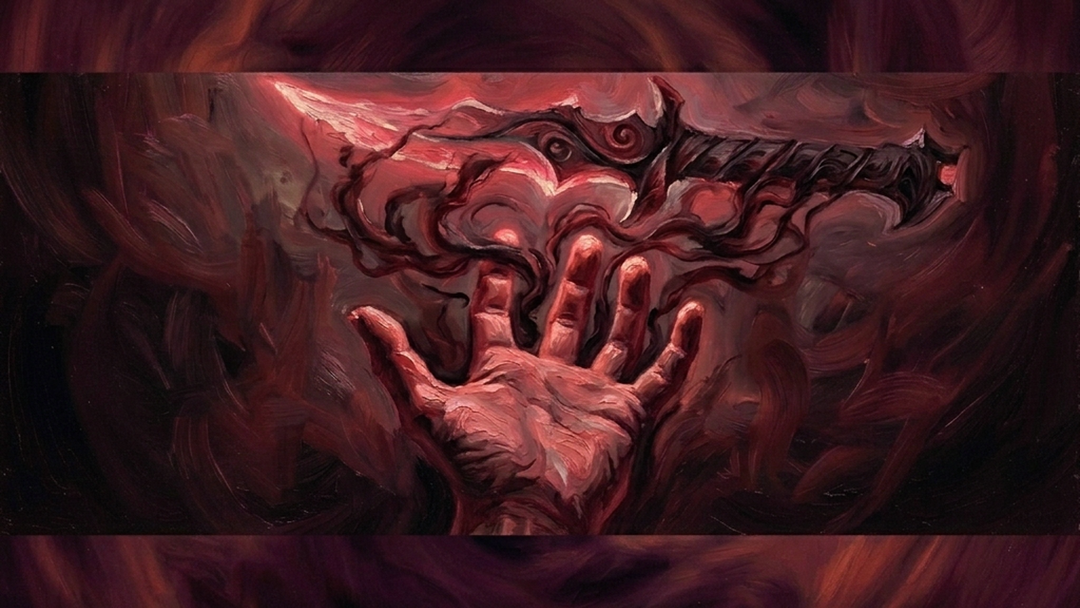
Part 2 ended on a promise: what happens after discovery, what removal actually looks like, and a sword with opinions about being put down.
The gauntlets told their story across four phases. The weight crept up, the icon changed, the name revealed itself. Discovery was the climax. This part is about everything after it.
Players who self-serve their own curse
Cursed items traditionally can't be dropped once attuned. Players learn fast. "Is this cursed? I'll try to drop it. Oh, I can't. Cursed." The pick-up-and-drop test defeats the entire deception.
So the item can't act suspicious during the latent period. Equipping and unequipping works normally. No resistance, no friction, no hint.
The gauntlets' sticky guard fires at Phase 2. The player tries to unequip. Nothing happens. The table goes quiet. "Wait, is this thing cursed?"
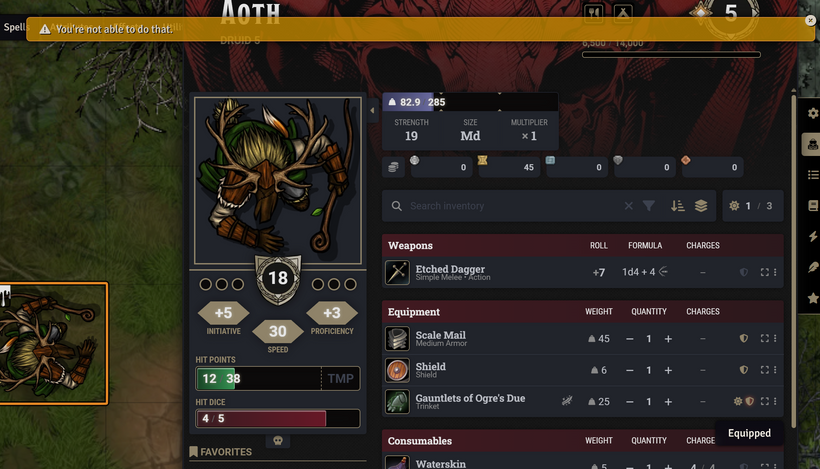
"I'm sorry Dave, I'm afraid I can't do that."
The player argued to the party to have the item. The GM signed off the effect sessions ago. The player discovered they cannot easily rid themselves of the item.
The player has now fully self-served their own curse!
Part 2 also promised a sword with opinions about being put down.
The Verdant Fang identifies as a shortsword with a faint green sheen. +1 to attack and damage, bonus poison on the first hit each combat. Solid. Not spectacular. The kind of weapon that does reliable work until something better comes along.
The sword disagrees.
The first signs aren't mechanical. You turn over in your sleeping roll. The sword is in your arms. You reach into your pack for rations. Your fingers close around a hilt. You left it propped against the wall before bed. It's on your pillow.
Then you find a greatsword. A real upgrade. You equip it, go into combat, swing. The attack resolves with the Fang instead. The greatsword is in your pack. You didn't do that. You tell the GM the UI glitched. The GM says no.
The curse is called The Jealous Edge. 10% of attacks at first. You drop the Fang, pull the greatsword, keep fighting. A few swings later, it's back in your hand. You sell it to a merchant. Next session, mid-combat, it's in your grip. You throw it down a well. It comes back. 25% now. Then 40%.
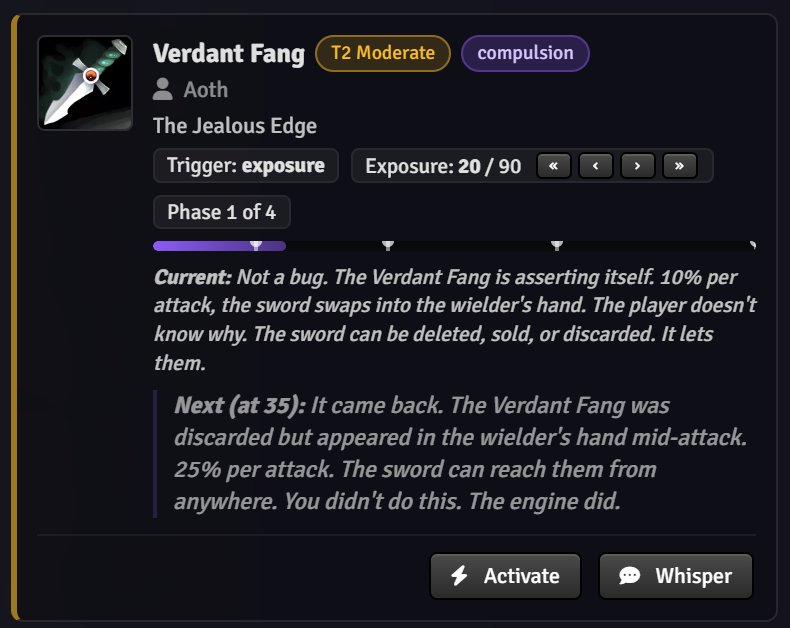
The big fight. One clean hit with the greatsword ends it. You could be the hero. The attack resolves with a d6 shortsword.
"IT'S THAT ****ING SWORD AGAIN."
Both discoveries were self-served. The gauntlets made the table go quiet. The Fang made it erupt. The GM didn't narrate either moment. The system created them and the players walked into them on their own terms.
The dilemma
What comes after discovery is where curse systems usually get it wrong. The temptation is to make the curse fight back harder once the player knows. But that's the designer fighting the player. And the player is the hero.
The Berserker Axe from Part 1 didn't have any of this. Attune, curse active, combat worse, scroll arrives, done. Nothing happened between activation and removal. No arc, no discovery, no moment where the table went quiet or erupted. The axe was just a debuff until the GM is merciful enough to throw in a Remove Curse.
The gauntlets are different. STR 17 isn't 19, but it's still better than the fighter's natural 15. 60 lb is brutal. But even diminished, the bonus is still real. The cleric offers Remove Curse and the fighter does the maths. Without the gauntlets, every grapple, every athletics roll, every attack modifier drops back to whatever it was naturally.
Before and after remove curse:
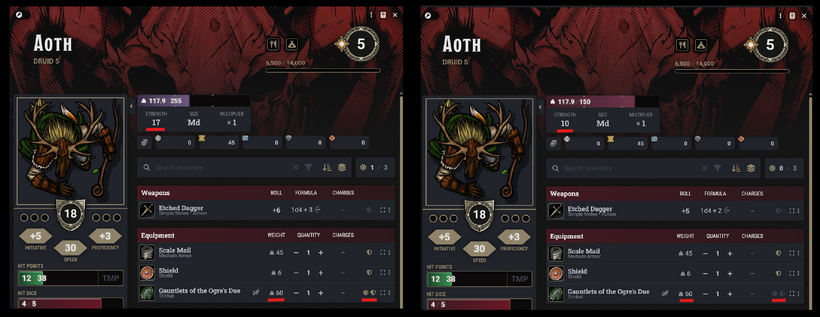
"Not yet."
That's the moment. The player knows exactly what they're holding and chooses to keep holding it. The curse won the argument before the cleric even prepared the spell.
The Fang's wielder doesn't hesitate - they're furious. But fury is engagement. The table is laughing, the player is scheming, everyone has opinions about the sword. That's the curse working. The axe had stories too - we've been telling one across three posts - but those came from the cleric playing into it, not from the system giving them a reason to. The gauntlets and the Fang don't need a generous player. The system does the work.
Remove Curse
Remove Curse frees the creature. For most curses, that's a 3rd-level spell any cleric can cast. The bond breaks, effects end, the player walks away. What varies is the cleanup.
GM override buttons:
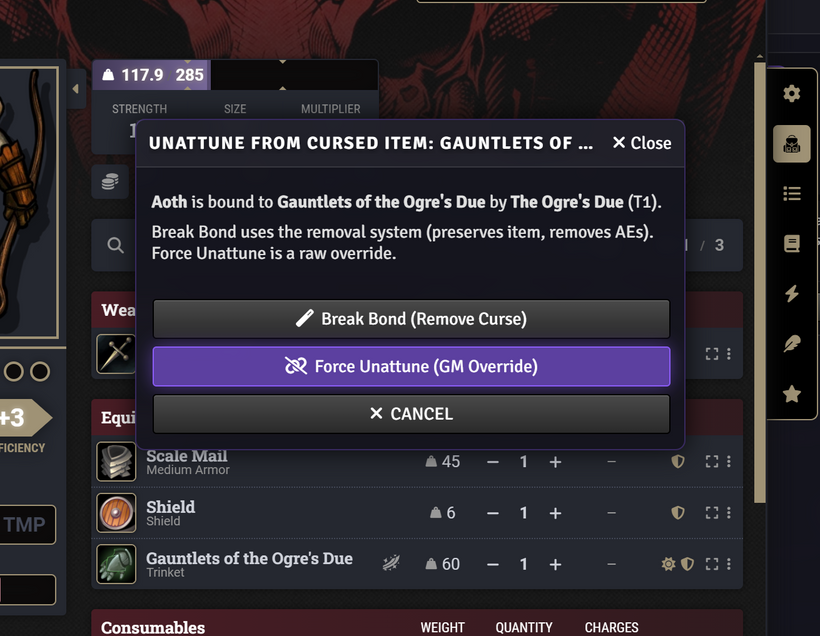
The gauntlets are Tier 1. Clean break. Cast Remove Curse and the bond snaps. STR drops back to natural. The player feels the loss immediately but the mechanics are instant.
The Fang is Tier 2. Remove Curse breaks the bond, but the sword's grip doesn't snap off cleanly. It dims. 30% swap chance in the next combat. 10% in the one after. Then gone. The hand stops reaching. The fade is finite, strictly diminishing. Not friction. The curse reluctantly letting go.
At higher tiers the cost scales. A Tier 4 curse might need a Wish or divine intervention to break free. I haven't fully explored that design space yet. A managed cost after removal - not constant suffering, but an occasional spike. A reminder that the thing was there. The line between consequence and punishment is thinner than it looks. That'll get its own post when we're further along.
The principle still holds: the curse's value is in the journey. The slow build, the discovery, the table going quiet or erupting. By the time someone casts Remove Curse, that story has already been told. Don't fight the player at the finish line.
What's next
Quick expectations check: curses are not in Quartermaster EA yet. The loot cache engine and identification takeover are live, but the curse system described in these posts is current focus, not current release. They're coming. T1 and T2 curses drop in the next couple of weeks, T3 and T4 after that. Each curse takes a lot of effort - they are each bespoke and different.
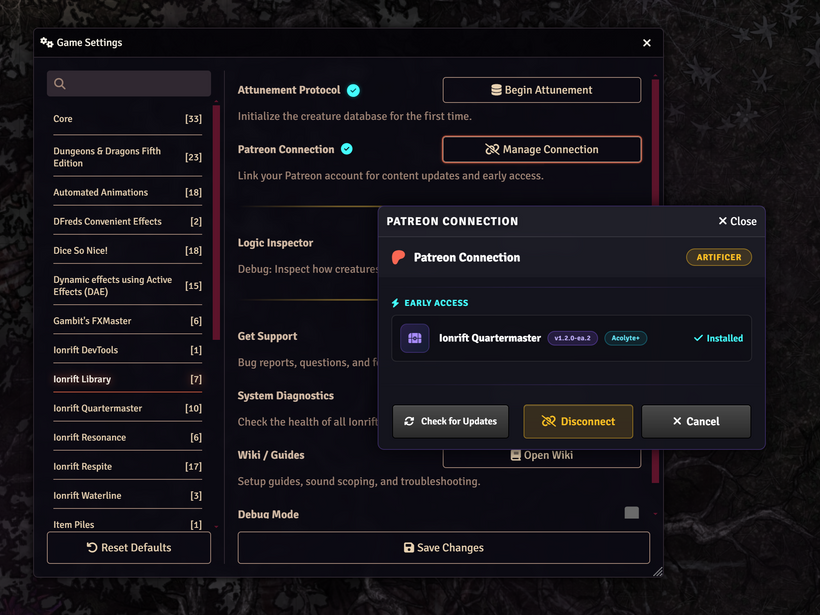
There's a lot in the pipeline across Quartermaster, Respite, and Resonance, not to mention unreleased modules bubbling away behind the scenes. Working across multiple fronts at once is slower than focusing on one, but everything feeds into the same table experience.
The hardest part of building this hasn't been the code. It's been figuring out what curses are actually supposed to do at the table, then building something that helps GMs run that without juggling three item documents and a notebook.
-- Ionrift